Travel organization · Materials and care
Gingerlily Silk Laundry Bags and the Art of Separating Travel Laundry
A dedicated laundry bag is a modest piece of travel equipment with an outsized talent: it keeps the journey’s accumulation of worn clothes from quietly taking over the clean ones. Gingerlily’s silk versions bring a light, breathable alternative to the familiar plastic sack, and invite a more considered way of packing.
The small problem of the suitcase
At the beginning of a trip, a suitcase is full of intentions. Shirts are folded into orderly rectangles; socks have been paired; a sweater occupies the corner assigned to it. Then the trip begins. A day’s clothes come off, a fresh outfit goes on, and the case becomes a record of these exchanges. Clean and worn garments, once separated by an invisible border, begin to drift toward one another.
This is not a catastrophe. It is, however, a minor domestic puzzle repeated in hotel rooms, guest rooms, train compartments, and the narrow spaces beside a bed. A laundry bag solves it without demanding a complicated system. It gives worn garments a place to wait until washing, while the rest of the suitcase remains easier to navigate. The benefit is practical, but also psychological: an open case looks less like a rummage and more like a plan.
The bag need not be grand. It needs to hold the amount of laundry a traveler is likely to accumulate, close securely enough for packing, and take up little space when empty. Fabric matters, too. A heavy, rigid container may be useful in a closet, but less appealing in luggage already occupied by shoes, toiletries, and the particular book that was supposed to be read on the plane.
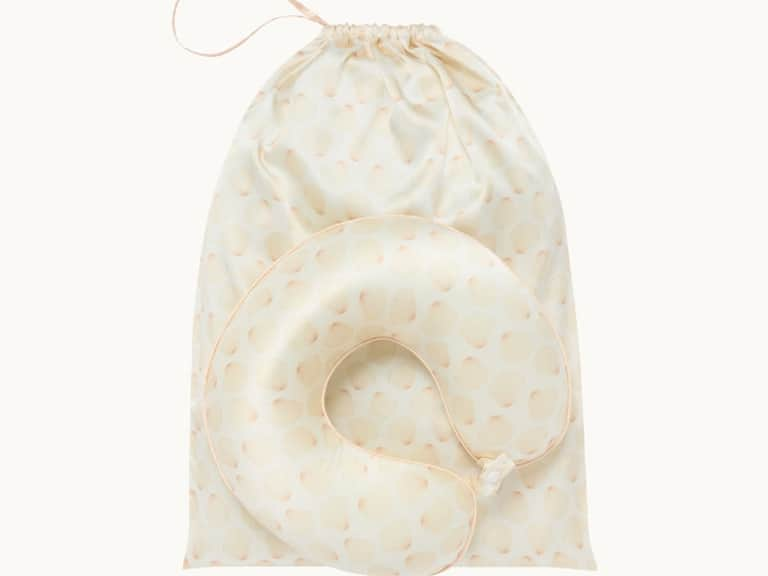
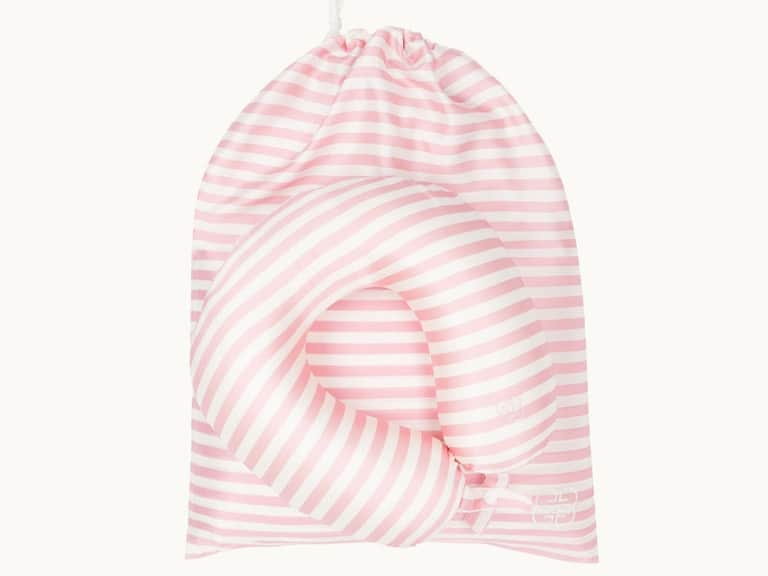
Gingerlily’s silk laundry bags approach this ordinary task with a material not usually associated with dirty clothes. Made from 100% Mulberry silk and described as 19 Momme, they are designed to separate worn garments while remaining light enough for travel. The pink-and-ivory striped version measures 21 by 16 inches and has silk drawstring handles. A seashell-patterned alternative is also made from 19 Momme Mulberry silk and uses a drawstring closure. These are useful particulars, not promises of magic: a bag can organize laundry, but it cannot do the washing.
Why separate clean and worn clothes?
Travel organization is often discussed as a matter of efficiency: reduce wasted space, locate belongings quickly, fit everything into one case. But there is another, quieter purpose. Separation helps a traveler preserve distinctions that become blurred away from home. A clean shirt stays clean; a damp towel does not migrate unnoticed into a pile of folded clothes; the sweater worn on a long day can be kept apart from the one reserved for tomorrow.
Putting worn items together also makes unpacking less ambiguous. At home, the bag can be carried directly to the laundry area, or emptied into a hamper. Without one, garments may need to be sorted individually from among the remaining contents. The bag is not an elaborate packing method. It is a boundary, and boundaries are valuable when a suitcase is serving as wardrobe, cupboard, and temporary floor all at once.
For a short trip, the difference may be slight. For a longer one, or a journey involving several stops, a dedicated place for worn clothing can help maintain order across repeated packing and unpacking. It is especially useful when clean and used items must travel together for several hours, or when luggage will be opened in a shared space. The goal is not to make travel immaculate. It is to keep the inevitable disorder from becoming needlessly confusing.
There are limits to what a laundry bag should be asked to do. It is not a sealed barrier against odors or moisture, and a breathable textile bag should not be treated as a waterproof container. Wet swimwear, a towel that has not dried, or clothing stained with liquids is better handled separately. If an item is damp, allow it to dry as much as circumstances permit before placing it among other clothes. If it must be contained temporarily, use a purpose-made waterproof pouch rather than assuming silk will prevent moisture from passing through.
Silk in a practical role
Silk often enters the imagination through clothing, bedding, or formal occasions. In a travel laundry bag, it performs a less ceremonious task. Its appeal is partly tactile: it is smooth and light, and does not bring the coarse feel of a heavy utility sack. Its low bulk is also relevant. A bag that folds down easily can be carried without forcing the traveler to reserve a permanent, substantial portion of the suitcase for it.
Breathability is another consideration. A fabric that permits air to circulate can be preferable to a closed plastic bag when clothes are dry but worn. That does not mean silk will refresh garments, remove smells, or make damp laundry safe to leave for an extended period. It simply describes a different kind of containment: less sealed, more suited to separating ordinary worn clothes during a journey.
Material choice should follow the job. A laundry bag intended for dry clothing and light packing has different requirements from a waterproof sack for wet kit, a washable mesh bag for delicate garments, or a structured organizer meant to protect fragile objects. Silk brings softness and a refined surface; it also asks for more thoughtful care than a rugged canvas tote. The right choice is less about ranking materials than about understanding their trade-offs.
The term “Momme” is used to describe the weight of silk. A 19 Momme specification offers a useful point of reference when comparing silk products, but it should not be treated as a guarantee of a bag’s total durability. Construction, seams, drawstring channels, use, and laundering all affect how an item holds up. A fabric weight tells part of the story, not the whole one.
For travelers drawn to the striped design, the Gingerlily Silk Laundry Bag in Pink & Ivory Stripe combines 19 Momme Mulberry silk with a 21-by-16-inch shape and silk drawstring handles. Those dimensions give a useful sense of capacity, though the number of garments it holds will vary with fabric thickness and how compactly they are folded. The listed care instructions call for a delicate machine-wash cycle at no more than 30°C, air drying, and cool ironing.
The Gingerlily Silk Laundry Bag in Seashells offers another design in 19 Momme Mulberry silk, with a drawstring closure and a stated use for travel laundry or delicate storage. Its description does not give dimensions, so travelers who need to know precisely how it will fit alongside other packing organizers should verify the measurements before planning around it. A pattern may catch the eye; capacity and care instructions are the details that determine whether the bag fits a particular routine.
Choosing a size that earns its place
A laundry bag can be too small to help and too large to pack comfortably. The useful size depends on trip length, the clothes being carried, and how often laundry will be done. A weekend traveler who expects to wash clothes at the destination may need little room. Someone away for a week without convenient laundry may accumulate a far larger bundle. Climate matters: lightweight summer garments occupy less volume than thick winter layers, while exercise clothing and extra changes add to the count.
It helps to think in terms of the bag’s role rather than an abstract capacity. Is it intended for socks and undergarments only? For every worn item? For a small family sharing luggage? The answers change the space required. A bag that is generously sized in isolation may become awkward when packed beside a toiletry kit and a pair of shoes. Conversely, a compact bag may fill quickly and leave loose garments to wander through the suitcase.
Dimensions can be easier to assess when compared with the space available in the luggage itself. A 21-by-16-inch bag, for instance, has a broad, flat profile when laid out, but its packed shape will depend on what it contains and how it is folded. Measure the interior of the suitcase or the compartment where it is likely to sit. Consider whether the bag will be packed flat, folded, or tucked into a side pocket. The aim is to give it an ordinary home in the case, not to build an itinerary around it.
Closure is part of this calculation. A drawstring is uncomplicated and allows the opening to be gathered around the contents. It is not the same as a zippered, airtight, or waterproof seal. If the bag will be moved frequently or carried by its handles, the user should avoid overfilling it and should make sure the opening is drawn closed before putting it in luggage. A secure, modestly packed bundle is easier to manage than a bulging bag whose contents are under strain.
A calmer packing routine
The best system is often the one that can be followed while tired. On arrival, designate one place for clean clothes and one for laundry. The laundry bag may live in a suitcase pocket or a drawer; it need not be displayed or ceremonially unfolded. After changing, place dry worn garments inside. If an item is still damp, hang it to dry where possible rather than adding it to the main bundle.
Separate special cases when needed. Shoes should generally be kept apart from clothing, and toiletries belong in a suitable leak-resistant pouch. Wet swimwear should not be mixed with dry laundry just because both are technically used. Delicate garments may benefit from their own protective storage, especially if zippers, hooks, or rough fabrics are nearby. A laundry bag is one part of a packing system, not a substitute for every other container.
During a multi-stop trip, empty the bag when convenient rather than allowing it to become a compressed, forgotten parcel at the bottom of the case. If laundry facilities are available, a simple cycle can reset the system. If they are not, keeping the bag in a predictable location still makes it easier to find clean clothes and to estimate what remains wearable. Organization is most effective when it reduces small decisions rather than adding new ones.
Before departure, leave the bag accessible rather than burying it beneath items that will be difficult to move. It can be placed in the suitcase last, folded around other soft goods, or kept in a pocket that is easy to reach. On the return journey, the same arrangement can help contain worn clothing without requiring the traveler to reconstruct the original packing order. A little foresight at the start saves rummaging at the end.
Caring for a silk laundry bag
Silk care begins with the product’s specific instructions. For the pink-and-ivory striped Gingerlily bag, the stated method is a delicate machine-wash cycle at a temperature no higher than 30°C, followed by air drying and, if needed, a cool iron. Those instructions should take precedence over broad rules of thumb. Different dyes, trims, linings, or constructions can alter what is appropriate, so a traveler should check the care label and product guidance before washing.
When machine washing is recommended, a gentle cycle and a low temperature reduce unnecessary agitation and heat. A mesh wash bag may provide an additional layer of protection, if compatible with the item’s care instructions. Use a suitable detergent, avoid overloading the machine, and do not wring the fabric aggressively. After washing, reshape the bag gently and let it air dry away from excessive heat. A dryer should not be used unless the manufacturer specifically permits it.
For a bag that has merely carried dry clothing and does not need a full wash, airing it out after unpacking may be enough. Empty it completely, shake out lint or crumbs, and leave it open in a clean, dry place. Before storing it for the next trip, make sure it is thoroughly dry. Silk should not be packed away damp, and a closed drawer or suitcase is no place for moisture to linger.
Care also includes how the bag is used. Avoid placing sharp objects inside; keep it away from rough hardware where practical; and do not load it so heavily that the handles or seams are strained. A drawstring bag is intended to be gathered, not hauled as though it were a reinforced duffel. Careful handling may seem almost too obvious to mention, yet it is often the difference between a useful travel accessory and one that becomes an emergency repair project.
Silk, cotton, or synthetic?
Travelers have several reasonable alternatives. Cotton canvas is durable and often straightforward to wash, though heavier fabric can take up more space. Lightweight synthetics may dry quickly and offer a practical option for frequent use, depending on their construction. Mesh can make contents visible and encourage air movement, but it also reveals what is inside. A plastic bag is inexpensive and can help contain moisture temporarily, but it is not an ideal long-term home for damp garments.
Silk occupies a particular place among these choices. It is light, smooth, and visually distinctive, which may suit travelers who want a storage accessory that feels considered rather than purely utilitarian. It also has care requirements worth noticing. If the bag is likely to be exposed to heavy abrasion, frequent rough handling, or wet gear, a more rugged material may be the more sensible tool. If its chief task is to keep dry worn clothes separate in a carefully packed suitcase, silk may be a pleasing and functional fit.
Neither material nor appearance can replace basic judgment about hygiene. Do not leave sweaty or wet clothes sealed for long periods. Do not assume breathability means immunity from odor or mildew. If a garment needs prompt washing, arrange that rather than expecting a storage bag to improve it. The bag’s value lies in keeping categories apart while the traveler gets from one place to another.
A useful accessory, not a packing philosophy
There is a temptation to turn every travel inconvenience into a new system, and every system into a collection of pouches. A laundry bag need not encourage that habit. Its purpose is specific: gather worn garments in one place, reduce contact with clean clothes, and make the eventual trip to the washing machine simpler. If it does those things without crowding the luggage or demanding fussy maintenance, it has justified its place.
Before choosing one, consider the length of travel, the amount and type of clothing, the available luggage space, and the care you are willing to give the bag itself. Check dimensions when they are provided. Notice how the opening closes. Think about whether your laundry will ordinarily be dry when stored, and whether the bag will be washed during or after the trip. These are more revealing questions than whether an accessory looks at home in a carefully styled packing photograph.
Gingerlily’s silk laundry bags make the most sense for travelers seeking a light, breathable way to keep worn clothes apart from clean ones, with a more delicate feel than canvas or a disposable plastic sack. Their role is limited, but useful. In the small, shifting geography of a suitcase, they mark a clear border: this has been worn; that remains ready. Travel is full of arrangements that last only until the next unpacking. This one is simple enough to survive the journey.
Frequently asked questions
Can a silk laundry bag hold damp clothes?
It is better to let damp garments dry before placing them with other laundry. A silk bag is not described as waterproof, and storing wet clothing can trap moisture or transfer it to other items. Use a purpose-made waterproof pouch when temporary containment of wet clothing is necessary.
How large is the Gingerlily pink-and-ivory laundry bag?
The listed dimensions are 21 by 16 inches. The amount it holds depends on the thickness and number of garments, so it is worth comparing those measurements with the available space in your luggage.
How should the striped Gingerlily silk laundry bag be washed?
Its stated care instructions specify a delicate machine-wash cycle at no more than 30°C, air drying, and cool ironing. Check the care information supplied with the item before washing.
Is silk the right material for every traveler?
Not necessarily. Silk is light and smooth, but travelers who need a waterproof, especially rugged, or frequently scrubbed laundry sack may prefer another material. The right choice depends on the trip, the contents, and the level of care the bag is likely to receive.