Materials, Use & Care
Coyuchi’s Organic Textile Accessories: A Guide to Materials and Care
A bag or pouch is a modest object with a surprisingly long day ahead of it. It may be carried through rain, packed against a suitcase, asked to contain damp swimwear, or left under a chair with the quiet optimism of something that will be put away later. The fibers it is made from—and the way they are washed, dried, and stored—help determine how well it handles those ordinary demands.
Published November 19, 2026
Textile accessories live at the intersection of clothing, travel, and domestic order. A pouch may separate small essentials inside a larger bag; a laundry sack can keep worn garments apart from clean ones; a roomy tote may move, in the course of a week, from errands to a weekend away and then to a shelf holding household linens. These objects are practical, but they are also tactile. Their weight, weave, lining, and finish make themselves known every time a zipper is drawn or a strap is lifted.
Coyuchi is associated with natural-fiber textiles and home goods, and its name offers a useful point of departure for considering organic textile accessories more broadly. The central questions are not mysterious: What is the fabric? How tightly is it woven? Does the item have a lining or a closure? What does its care label actually say? Yet the answers matter. They shape how an accessory feels in the hand, how it holds its form, and what kind of maintenance it can reasonably receive.
It is worth keeping one distinction clear. “Natural,” “organic,” and “durable” are not interchangeable descriptions. A fiber’s origin tells only part of the story; construction, finishing, stitching, and use all contribute to an object’s life. Organic linen and cotton can be appealing materials, but no fiber makes a bag impervious to abrasion, staining, or neglect. Thoughtful selection begins not with a broad promise about a material, but with a closer look at the job the accessory is expected to do.
What the fiber tells you—and what it does not
Linen is made from flax. In a finished accessory, it can feel crisp, textured, and substantial, or softer and more relaxed, depending on the yarn, weave, weight, and finish. Its visible slubs and irregularities are part of the character of the fiber, not necessarily signs of poor workmanship. Linen often suits organizers and pouches because it has a distinct hand and can lend a little body to a relatively simple shape. But a linen pouch is not automatically rigid: a loose weave, lightweight cloth, or unlined construction may leave it pliable.
Cotton is a versatile plant fiber used in everything from fine, smooth cloth to heavy canvas. The word “cotton” alone therefore tells a reader little about how an item will behave. A tightly woven, heavy canvas shopper has a different structure from a soft cotton laundry sack. The weight of the fabric, the density of its weave, and any lining or reinforcement all influence capacity and shape. A cotton accessory may be machine washable, but the label—not the general reputation of cotton—should settle that question.
Organic describes how a fiber was grown and processed under a particular certification or standard; it does not describe the finished object’s strength, washing tolerance, or environmental impact in every stage of its life. When a product carries a certification, it is useful to understand what that certification covers rather than treating the word as a complete account of the item. The finished accessory still has seams, thread, dyes, hardware, and possibly linings made from other materials. Those elements matter to both performance and care.
The useful habit is to read material descriptions as a set of clues. “100% linen” identifies the principal fabric, while details such as stonewashed finish, lining, zipper, or fabric weight add context. A product description may not include every technical measurement, and some terms are used differently across makers. Where a care label or manufacturer’s instructions are available, those should take precedence over assumptions based on fiber alone.
Weave, weight, lining, and the small architecture of a bag
A textile accessory is a small structure. Even a simple pouch has panels, seams, an opening, and, sometimes, a lining or gusset. The weave and weight of the outer fabric affect how readily it folds, how much it resists sagging, and how it feels when full. A gusset—the extra panel or folded section that creates depth—can make a compact pouch more accommodating. A lining can help protect the inside surface or add a finished feel, though it also introduces another material and another place where debris may collect.
Closures shape use just as much as cloth does. A zipper can help keep small contents contained when a pouch is tossed into luggage. A drawstring is straightforward and quick to operate, while an open-top tote favors easy access over enclosure. Neither is universally better. A gym change of clothes, a handful of cables, and a delicate garment each have different requirements. Asking what must be contained, protected, or reached quickly is more useful than searching for a single ideal closure.
For a compact linen organizer, a restrained construction may be the point. The Miles Pouch, for example, is described as a zippered pouch made from stonewashed linen textile, with a striped trim. Its closure gives small objects a defined place, while the fabric offers a more tactile alternative to slick synthetic organizers. It may be suitable for items that fit its dimensions and intended use; the description does not establish that it is waterproof or designed to protect fragile electronics, so those would be unreasonable assumptions.
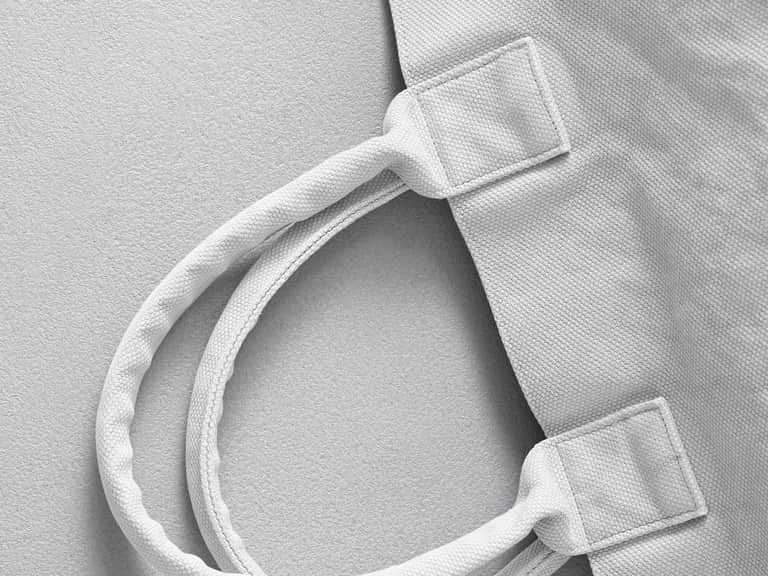
At the other end of the scale, a heavy canvas shopper is built around capacity and uncomplicated handling. The Drai Bag is described as a spacious, garment-dyed cotton-canvas bag without a zipper, with machine-wash care indicated in its product information. That combination suggests a utility-minded carryall for occasions such as a beach outing, sport, a weekend, or household storage. Its open top is convenient when loading bulky things; it also means contents are not enclosed. A bag’s limitations are often the reverse side of its advantages.
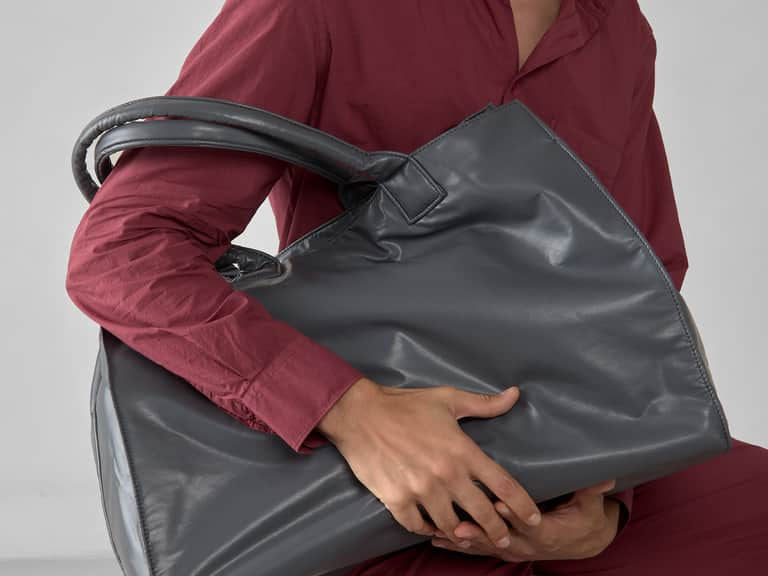
Not every accessory in this territory is made from plant fiber. The Puff Hang, made from recycled polyester with polyester and nylon in its listed composition, is another example of how textile construction can serve daily carrying. Its two wide handles and inside pocket are practical features, but its material is different from linen or cotton. It belongs in a material comparison precisely because “textile accessory” is a broader category than “natural-fiber accessory.”
Choosing by routine, not by idealized use
It is easy to imagine an accessory in its most photogenic setting: neatly packed, evenly filled, and carried on a dry afternoon. Real use is less composed. The right choice is the one whose construction matches the routines that are likely to recur. A small organizer should be easy to locate and open. A laundry bag should hold the volume of clothing it will actually receive. A tote intended for books or groceries needs fabric and seams appropriate to that load, not simply a pleasing surface.
Before choosing a bag or pouch, consider the following questions:
- What will it carry? Soft garments, toiletries, groceries, and hard objects put different stresses on fabric and seams.
- How much space is needed? Compare the stated dimensions with the objects you use every day; capacity descriptions can be difficult to picture without a reference.
- Does it need to close? A zipper or drawstring can contain contents, while an open top may make access faster.
- Will it be washed often? A frequently used travel or gym accessory should have care instructions compatible with the attention you can give it.
- Where will it be stored? A damp bathroom, a sunny windowsill, and a cool, dry cupboard are not equivalent environments for textiles.
These questions are especially helpful when selecting travel organizers. A laundry bag can separate worn clothes from clean ones without turning the suitcase into a filing cabinet. A pouch can keep small essentials from drifting among larger belongings. A soft-sided bag may compress when empty, which is convenient in luggage; it may also offer less protection than a structured case. Travelers should distinguish organization from protection. A fabric pouch can keep items together, but it should not be assumed to cushion a fragile object unless its construction specifically provides that support.
Washing: the label is the first authority
Textile-care advice becomes unreliable when it ignores differences in finish, construction, and trim. A linen item with a lining may behave differently from an unlined one. A colored fabric may have different washing needs from an undyed cloth. Zippers, drawcords, padding, and decorative details can all affect what is appropriate. For that reason, begin with the item’s own care instructions. General fiber guidance can help interpret them, but it should not overrule them.
Where machine washing is permitted, use the gentlest settings specified by the maker. A mild detergent and a moderate or cool water temperature are often sensible choices for washable textiles, but the label should determine the actual method. Avoid overloading the machine: crowded fabric cannot move and rinse as freely, and hardware can catch against other items. If a pouch has a zipper, close it before washing when the instructions allow machine care. Empty pockets and turn the item inside out if that is consistent with the maker’s guidance.
Spot cleaning can be useful for a small mark, though it is not a universal substitute for washing. Test any cleaning approach on an inconspicuous area if the maker’s instructions permit it, and avoid rubbing aggressively. Friction can roughen a surface, distort the weave, or spread a stain. For a stubborn mark, follow the manufacturer’s advice rather than reaching immediately for bleach, stain removers, or household solvents. These can change a fabric’s color or finish, sometimes in ways that become visible only after the area dries.
Textile accessories used for food, cosmetics, or toiletries need particular attention to the inside. Crumbs and residue can accumulate in corners and seams. Empty the item regularly and clean it according to its care instructions; then leave it open until fully dry. A fabric bag that is closed and put away while still damp can develop an unpleasant odor and may encourage mildew. “Dry” should mean dry at seams and folds, not just dry to the touch on the outer face.
Drying and storage: the unglamorous half of care
Drying is not a mere interval between washing and use. Heat can shrink or distort some textiles, while prolonged direct sunlight may fade colored fabric. If the label recommends air drying, reshape the item gently and let air circulate around it. A pouch can be opened fully; a tote can be hung or laid in a way that does not strain its handles. Avoid storing wet textiles in a hamper, suitcase, or closed drawer.
Machine drying should be used only when the care instructions allow it, and at the recommended setting. When there is uncertainty, air drying is generally the more cautious course. Do not stretch a damp bag into an exaggerated shape in an attempt to remove creases. A small amount of softness or wrinkling may be normal in natural-fiber cloth, and pressing or steaming should be undertaken only if the item’s instructions allow it. A clean, dry cloth accessory need not look newly unwrapped to be well cared for.
For storage between trips or seasons, empty the bag first. Shake out loose grit, check seams and pockets, and allow the item to dry completely. Store it in a clean, dry place away from prolonged sunlight and excess moisture. If a bag has been compressed for travel, refill it loosely with clean, dry tissue or fabric if it needs support—provided that the filling itself will not transfer dye or moisture. Do not pile heavy objects on top of soft organizers for long periods; repeated pressure can leave creases or flatten padding.
A note on wear, repairs, and useful longevity
Wear is not a single event. It accumulates at handles, corners, zipper ends, and seams: the places where hands pull, objects press, and fabric folds. Looking over these areas occasionally can reveal a loose thread or a stressed seam before it becomes a larger problem. If a stitch begins to loosen, avoid pulling at it. A repair made early may be simpler than one attempted after the seam has opened under load.
Keeping loads reasonable also extends the life of a textile bag. A fabric shopper may be sturdy, but the weight of its contents is carried by the handles and their attachment points. Heavy, sharp-edged objects can abrade or puncture cloth; liquids can stain it or seep through. For travel, placing toiletries in a separately sealed container is more reliable than expecting a textile pouch to contain a spill. For daily use, distributing weight and avoiding unnecessary overfilling are unassuming forms of maintenance.
Durability is therefore not a magic property hidden in a fiber. It is the result of material, construction, use, and care working together. Organic linen can be a comfortable, distinctive fabric for a small organizer. Cotton canvas can make sense for a roomy carryall. Recycled synthetic textiles may offer a different mix of weight, feel, and performance. None removes the need to match the object to its task or to read its care instructions.
A compact care routine
For most textile organizers, an uncomplicated routine is enough: empty them regularly, brush or shake out loose debris, attend to small marks promptly, and wash only as directed. After washing, dry thoroughly before returning the item to a drawer or suitcase. Check the lining, seams, and closures from time to time. If an accessory is used to carry damp clothing or toiletries, give it additional ventilation between uses.
The broader lesson is not that every bag requires ceremony. It is that ordinary objects last longer when their materials are understood. A label can tell you whether the maker permits machine washing; a description can explain whether a pouch is lined or a shopper is open at the top; a little attention can prevent moisture, overloading, or careless cleaning from turning a useful accessory into a short-lived one. That is the practical promise of a well-chosen textile organizer: not perfection, but a reliable place for things, made more useful by knowing how to look after it.
In the end, the most persuasive accessory may be the one that recedes into the day. It holds what it was meant to hold, travels without fuss, and returns from use ready for the next errand or journey. Linen, cotton, and other textiles each bring their own character to that small contract. Care begins by noticing the difference.